
Nerve Conduction Studies (NCS) & Electromyography (EMG)
Nerve Conduction Studies (NCS) and Electromyography (EMG) are diagnostic tests used to evaluate how well your nerves and muscles are working. These studies help identify the cause of symptoms such as pain, numbness, tingling, weakness, or muscle cramps.
Nerve Conduction Study (NCS):
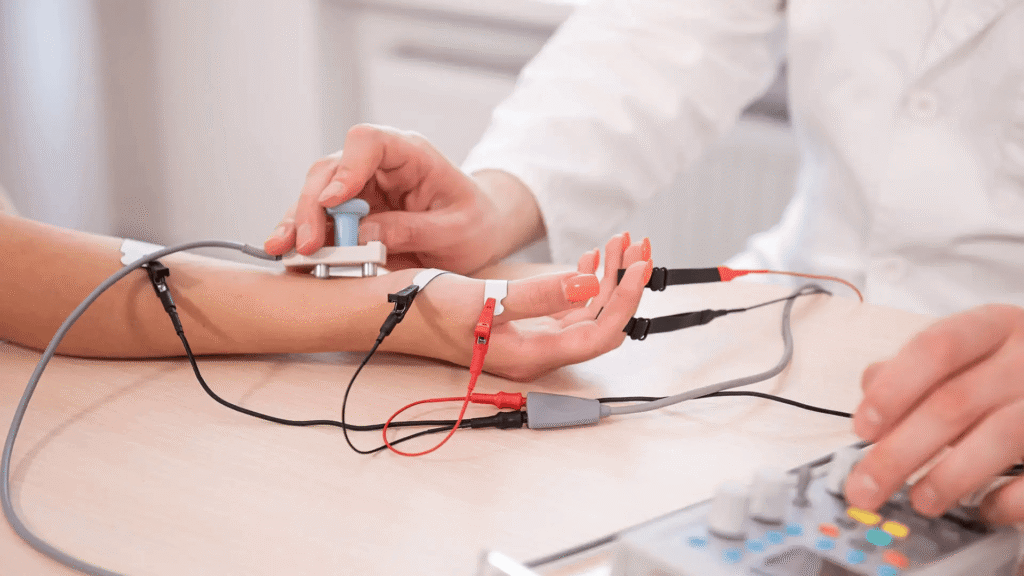
This test measures how fast and how strong electrical signals travel through your nerves. Small surface electrodes are placed on the skin, and gentle electrical impulses are applied. This helps detect nerve damage, compression, or irritation.
Electromyography (EMG):
EMG evaluates the electrical activity of muscles. A very thin needle electrode is inserted into selected muscles to assess how they function at rest and during movement. This helps determine whether symptoms are coming from the muscle itself or from the nerve supplying it.
Why these tests are performed
Pinched nerves (such as carpal tunnel syndrome or sciatica)
Peripheral neuropathy
Radiculopathy (nerve root problems from the spine)
Muscle disorders
Unexplained weakness or numbness
What to expect
The study is performed in the office
No anesthesia is required
Mild discomfort may occur, but the test is generally well tolerated
Results help guide accurate diagnosis and treatment planning
These tests provide valuable information that allows your physician to develop a targeted and personalized treatment plan.