
Knee Pain Management
Knee pain is a common condition that can result from osteoarthritis, trauma, overuse, or degenerative joint disease. Our team is dedicated to identifying the specific source of your pain and developing a personalized treatment plan tailored to your needs.
In many cases, knee pain can be effectively managed with conservative therapies such as activity modification, physical therapy, bracing, and weight management. These approaches help reduce strain on the joint, improve strength and flexibility, and support long-term joint health.
For patients who do not achieve adequate relief with conservative treatments, especially those with specific underlying conditions, advanced interventional therapies may be beneficial. These include biologic treatments such as platelet-rich plasma (PRP) to promote tissue repair, intra-articular corticosteroid injections to reduce inflammation, hyaluronic acid injections (viscosupplementation) to improve lubrication, and genicular nerve radiofrequency ablation (RFA) to decrease pain transmission.
These therapies have been shown in medical studies to significantly reduce pain, enhance joint mobility, and improve overall function and quality of life. In more advanced cases, evaluation by an orthopedic specialist for surgical options may be appropriate.
Our goal is to restore mobility, reduce pain, and improve your quality of life through a comprehensive, stepwise, and patient-focused approach.
Knee Radiofrequency Ablation (RFA)
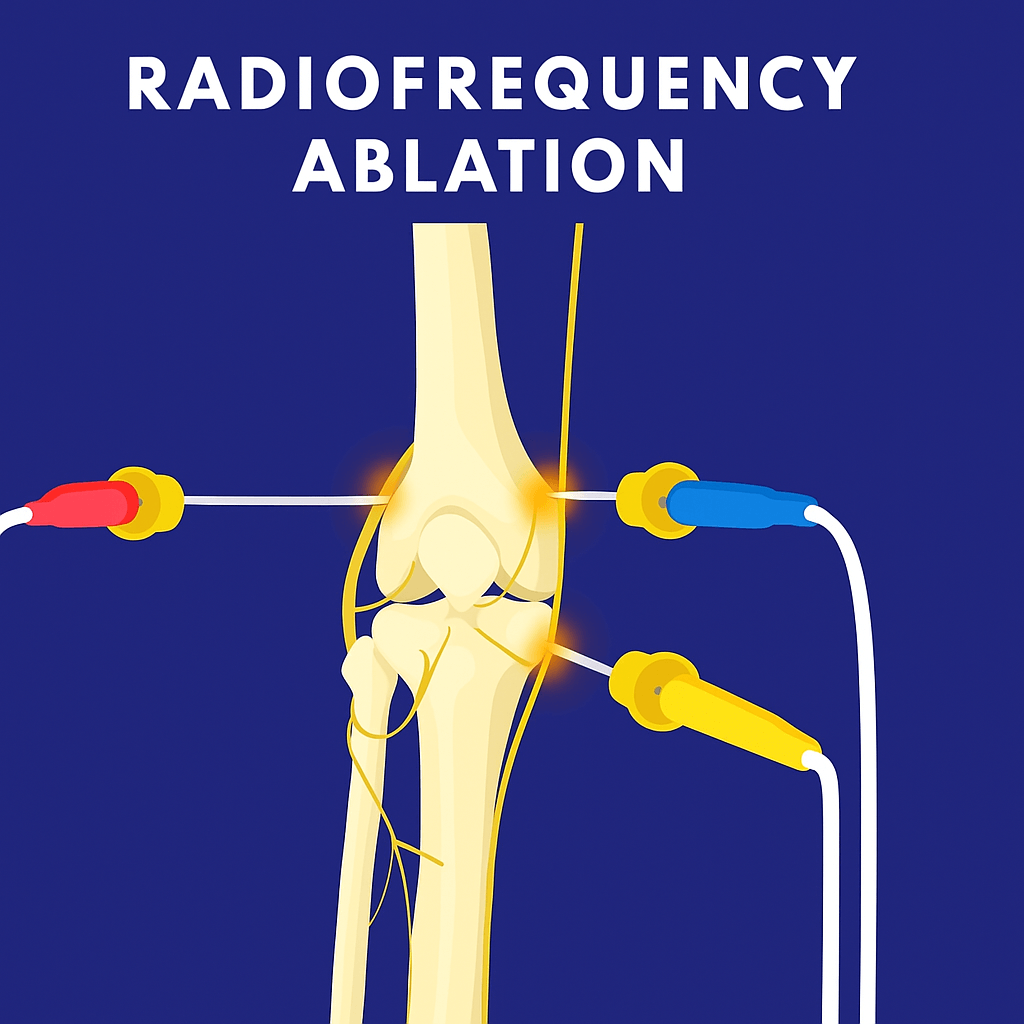
Knee radiofrequency ablation is a minimally invasive procedure used to relieve chronic knee pain caused by arthritis or persistent pain after knee surgery. It works by using controlled heat energy to target and deactivate the small sensory nerves around the knee that transmit pain signals.
The procedure is performed under local anesthesia with the guidance of imaging such as fluoroscopy or ultrasound. Most patients experience significant pain relief within a few weeks, along with improved mobility and reduced reliance on pain medications.
Clinical research has shown that relief from knee radiofrequency ablation can last from six to twelve months or longer. Since the treated nerves may regenerate over time, the procedure can be safely repeated if symptoms return.
Knee radiofrequency ablation offers an effective, non-surgical option for patients seeking long-term pain relief and improved function.